Showing posts with label lectionary poetry. Show all posts

Wednesday, May 7, 2025

Jesus Feeds the Birds

And it’s not always pretty.

Those lilies clothed in Solomon’s splendor
splotch with the leftover tufts

of field mice. For every hummingbird
darting at an orchid, every goldfinch
nibbling a quivering primrose stalk,

is an osprey disemboweling a flounder
or a golden eagle snapping
a badger’s neck midair. They do not

sow or heap seed heads in barns.
They swoop and pluck
in the moment, just as their meals

suddenly find themselves
sliding down a gullet. Of course I can’t
forget them, the ragged spirits of prey,

the grains and spores that never
had a chance to germinate. The dead
scamper and bloom in the shadow

of my wings, spreading and trailing
in a train of many colors, and oh,
the conversations we have.

-----Tania Runyan, NEA fellow, and poet

Scripture reference: Luke 12:22-31, 11th Sunday after Pentecost C

Tuesday, June 4, 2024

A House Divided


On a railroad car in your America,
I made the acquaintance of a man
who sang a life-song with these lyrics:
"Do whatever you can/ to avoid
becoming a roofing man."
I think maybe you'd deem his tenor
elitist, or you'd hear him as falling
off working-class key. He sang
not from his heart but his pulsing
imagination, where every roof is
sloped like a spire and Sequoia tall.
Who would wish for themselves, another,
such a treacherous climb? In your America,
a clay-colored colt stomps, its hooves
cursing the barn's chronic lean.
In your America, blood pulses
within the fields, slow-poaching a mill saw's
buried flesh. In my America, my father
awakens again thankful that my face
is not the face returning his glare
from above eleven o'clock news
murder headlines. In his imagination,
the odds are just as convincing
that I would be posted on a corner
pushing powder instead of poems—
no reflection of him as a father nor me
as a son. We were merely born
in a city where the rues beyond our doors
were the streets that shanghaied souls.
To you, my America appears
distant, if even real at all. While you are
barely visible to me. Yet we continue
stealing glances at each other
from across the tattered hallways
of this overgrown house we call
a nation—every minute
a new wall erected, a bedroom added
beneath its leaking canopy of dreams.
We hear the dripping, we feel drafts
wrap cold fingers about our necks,
but neither you or I trust each other
to hold the ladder or to ascend.


-- Kyle Dargan (1980- ), prize-winning African American poet, professor, and teacher of creative writing

Image: A House Divided, by Lynette Cook

Scripture reference: Mark 3:20-35, 3rd Sunday after Pentecost, Proper 5B

The poet writes about this poem at The American Academy of Poets about this poem:
"I took Amtrak from Washington, D.C. to Atlanta for my brother's wedding. I'd never travelled that far south by train. I saw a familiar but antiquated ruralness—another iteration of America. On the return, I grabbed a seat next to a group of Alabamians on their way to Jon Stewart's Rally to Restore Sanity. It seemed that, in the moment, there were so many different “Americas” colliding in the coach. While conversing about work over a dining car breakfast, one of the men, Mike Laus, offered a line about roofing someone had passed on to him. It struck me, and provided an entry point for musing on how little we see of, or believe in, each other's Americas."

Thursday, March 21, 2024

Palm Sunday


And He answered and said unto them, I tell you, that if these should hold their peace, the stones would immediately cry out.
St. Luke xix. 40.

YE whose hearts are beating high 
With the pulse of Poesy,
Heirs of more than royal race,
Fram’d by Heaven’s peculiar grace,
God’s own work to do on earth,
(If the word be not too bold,)
Giving virtue a new birth,
And a life that ne’er grows old—

Sovereign masters of all hearts!
Know ye, who hath set your parts?
He who gave you breath to sing,
By whose strength ye sweep the string,
He hath chosen you, to lead
His Hosannas here below;—
Mount, and claim your glorious meed;
Linger not with sin and woe.

But if ye should hold your peace,
Deem not that the song would cease—
Angels round his glory-throne,
Stars, His guiding hand that own,
Flowers, that grow beneath our feet,
Stones in earth’s dark womb that rest,
High and low in choir shall meet,
Ere His Name shall be unblest.

Lord, by every minstrel tongue
Be thy praise so duly sung,
That thine angels’ harps may ne’er
Fail to find fit echoing here:
We the while, of meaner birth,
Who in that divinest spell
Dare not hope to join on earth,
Give us grace to listen well.

But should thankless silence seal
Lips, that might half Heaven reveal,
Should bards in idol-hymns profane
The sacred soul-enthralling strain,
(As in this bad world below
Nobles things find vilest using,)
Then, thy power and mercy shew,
In vile things noble breath infusing;

Then waken into sound divine
The very pavement of thy shrine,
Till we, like Heaven’s star-sprinkled floor,
Faintly give back what we adore.
Childlike though the voices be,
And untunable the parts,
Thou wilt own the minstrelsy,
If it flow from childlike hearts.


--John Keble (1792-1866), English Anglican priest and poet, one of the leaders of the Oxford movement, from The Christian Year.

Wednesday, August 9, 2023

The Calm


Our storm is past, and that storm’s tyrannous rage,
A stupid calm, but nothing it, doth ‘suage.
The fable is inverted, and far more
A block afflicts, now, than a stork before.
Storms chafe, and soon wear out themselves, or us;
In calms, Heaven laughs to see us languish thus.
As steady’as I can wish that my thoughts were,
Smooth as thy mistress’ glass, or what shines there,
The sea is now; and, as the isles which we
Seek, when we can move, our ships rooted be.
As water did in storms, now pitch runs out;
As lead, when a fir’d church becomes one spout.
And all our beauty, and our trim, decays,
Like courts removing, or like ended plays.
The fighting-place now seamen’s rags supply;
And all the tackling is a frippery.
No use of lanthorns; and in one place lay
Feathers and dust, to-day and yesterday.
Earth’s hollownesses, which the world’s lungs are,
Have no more wind than the upper vault of air.
We can nor lost friends nor sought foes recover,
But meteor-like, save that we move not, hover.
Only the calenture together draws
Dear friends, which meet dead in great fishes’ jaws;
And on the hatches, as on altars, lies
Each one, his own priest, and own sacrifice.
Who live, that miracle do multiply,
Where walkers in hot ovens do not die.
If in despite of these we swim, that hath
No more refreshing than our brimstone bath;
But from the sea into the ship we turn,
Like parboil’d wretches, on the coals to burn.
Like Bajazet encag’d, the shepherds’ scoff,
Or like slack-sinew’d Samson, his hair off,
Languish our ships. Now as a myriad
Of ants durst th’ emperor’s lov’d snake invade,
The crawling gallies, sea-gaols, finny chips,
Might brave our pinnaces, now bed-rid ships.
Whether a rotten state, and hope of gain,
Or to disuse me from the queasy pain
Of being belov’d and loving, or the thirst
Of honour, or fair death, out-push’d me first,
I lose my end; for here, as well as I,
A desperate may live, and a coward die.
Stag, dog, and all which from or towards flies,
Is paid with life or prey, or doing dies.
Fate grudges us all, and doth subtly lay
A scourge, ‘gainst which we all forget to pray.
He that at sea prays for more wind, as well
Under the poles may beg cold, heat in hell.
What are we then? How little more, alas,
Is man now, than before he was? He was
Nothing; for us, we are for nothing fit;
Chance, or ourselves, still disproportion it.
We have no power, no will, no sense; I lie,
I should not then thus feel this misery.

-- John Donne (1572-1631), Anglican priest, preacher, essayist, and metaphysical poet, Dean of St. Paul's Cathedral

Scripture reference: Matthew 14:22-33, Proper 14A

Image: The Stormy Sea, by Alma Thomas

Tuesday, August 8, 2023

Finisterre


The road in the end taking the path the sun had taken,
into the western sea, and the moon rising behind you
as you stood where ground turned to ocean: no way
to your future now but the way your shadow could take,
walking before you across water, going where shadows go,
no way to make sense of a world that wouldn’t let you pass
except to call an end to the way you had come,
to take out each frayed letter you had brought
and light their illumined corners; and to read
them as they drifted on the western light;
to empty your bags; to sort this and to leave that;
to promise what you needed to promise all along,
and to abandon the shoes that had brought you here
right at the water’s edge, not because you had given up
but because now, you would find a different way to tread,
and because, through it all, part of you would still walk on,
no matter how, over the waves.


--David Whyte (1955- ), Anglo-Irish poet and philosopher


(Finisterre means “End of the Earth” or “Land’s end;” those who walk the Camino Santiago pilgrimage in Spain often end their pilgrimages there, a wild and windswept place looking out over the sea.)

Scripture reference: Matthew 14:22-33, Proper 14 A

Image from Stingy Nomads.

Wednesday, May 31, 2023

The Creation


And God stepped out on space,
And he looked around and said:
I'm lonely—
I'll make me a world.

And far as the eye of God could see
Darkness covered everything,
Blacker than a hundred midnights
Down in a cypress swamp.

Then God smiled,
And the light broke,
And the darkness rolled up on one side,
And the light stood shining on the other,
And God said: That's good!

Then God reached out and took the light in his hands,
And God rolled the light around in his hands
Until he made the sun;
And he set that sun a-blazing in the heavens.
And the light that was left from making the sun
God gathered it up in a shining ball
And flung it against the darkness,
Spangling the night with the moon and stars.
Then down between
The darkness and the light
He hurled the world;
And God said: That's good!

Then God himself stepped down—
And the sun was on his right hand,
And the moon was on his left;
The stars were clustered about his head,
And the earth was under his feet.
And God walked, and where he trod
His footsteps hollowed the valleys out
And bulged the mountains up.

Then he stopped and looked and saw
That the earth was hot and barren.
So God stepped over to the edge of the world
And he spat out the seven seas—
He batted his eyes, and the lightnings flashed—
He clapped his hands, and the thunders rolled—
And the waters above the earth came down,
The cooling waters came down.

Then the green grass sprouted,
And the little red flowers blossomed,
The pine tree pointed his finger to the sky,
And the oak spread out his arms,
The lakes cuddled down in the hollows of the ground,
And the rivers ran down to the sea;
And God smiled again,
And the rainbow appeared,
And curled itself around his shoulder.

Then God raised his arm and he waved his hand
Over the sea and over the land,
And he said: Bring forth! Bring forth!
And quicker than God could drop his hand,
Fishes and fowls
And beasts and birds
Swam the rivers and the seas,
Roamed the forests and the woods,
And split the air with their wings.
And God said: That's good!

Then God walked around,
And God looked around
On all that he had made.
He looked at his sun,
And he looked at his moon,
And he looked at his little stars;
He looked on his world
With all its living things,
And God said: I'm lonely still.

Then God sat down—
On the side of a hill where he could think;
By a deep, wide river he sat down;
With his head in his hands,
God thought and thought,
Till he thought: I'll make me a man!

Up from the bed of the river
God scooped the clay;
And by the bank of the river
He kneeled him down;
And there the great God Almighty
Who lit the sun and fixed it in the sky,
Who flung the stars to the most far corner of the night,
Who rounded the earth in the middle of his hand;
This great God,
Like a mammy bending over her baby,
Kneeled down in the dust
Toiling over a lump of clay
Till he shaped it in is his own image;

Then into it he blew the breath of life,
And man became a living soul.
Amen. Amen.


--James Weldon Johnson (1871-1938), poet, journalist, NAACP activist, who wrote the words to the "Black National Anthem" "Life Every Voice and Sing" set to music by his brother.

Scripture reference: Genesis 1:1-2:4a, Trinity Sunday Year A

Friday, May 12, 2023

Praise to God for Hearing Prayer


Now shall my solemn vows be paid
To that Almighty Power,
That heard the long requests I made
In my distressful hour.

My lips and cheerful heart prepare
To make his mercies known;
Come, ye that fear my God, and hear
The wonders he has done.

When on my head huge sorrows fell,
I sought his heav’nly aid;
He saved my sinking soul from hell,
And death’s eternal shade.

If sin lay covered in my heart,
While prayer employed my tongue,
The Lord had shown me no regard,
Nor I his praises sung.

But God (his name be ever blest)
Has set my spirit free;
Nor turned from him my poor request,
Nor turned his heart from me.

-- Isaac Watts (1674-1748) English theologian, philosopher, teacher, hymn writer and nonconformist, Independent church minister, one of the greatest hymn writers in English history.

Scripture reference Psalm 66:8-20, Easter 6A

Monday, May 8, 2023

To The Unknown God


Once more, before my vision turns
To strange horizons, untried lands,
To thee I lift my lonely hands
For whom my spirit yearns,
To whom, within its ultimate shrine,
Are solemn altars dedicate
While yet I wait
The summoning voice to claim me thine.
Thereon is writ in characters ablaze
The deep-cut legend, “To the Unknown God”;
For his am I, although my feet have trod,
Even to this hour, in foul and miry ways,
Yea, I will know thee, great Unknown,
Who shakest the foundations of my soul,
Urgent and clamorous as the thunder’s roll.
Eternally apart, eternally my own,
Yea, I will know thee — I will serve thee.

--Friedrich Nietzsche (1844-1900), German philosopher, philologist, critic, founder of nihilism, influencer of Nazism, vehement atheist and hater of Christianity, and yeah, I am just as surprised as anyone by this poem, but it was written when a young man before he denounced Christianity.

Scripture reference: Acts 17:22-31, Easter 6A

Friday, May 5, 2023

truth


And if sun comes
How shall we greet him?
Shall we not dread him,
Shall we not fear him
After so lengthy a
Session with shade?

Though we have wept for him,
Though we have prayed
All through the night-years—
What if we wake one shimmering morning to
Hear the fierce hammering
Of his firm knuckles
Hard on the door?

Shall we not shudder?—
Shall we not flee
Into the shelter, the dear thick shelter
Of the familiar
Propitious haze?

Sweet is it, sweet is it
To sleep in the coolness
Of snug unawareness.
The dark hangs heavily
Over the eyes.

-- Gwendolyn Brooks (1917-2000), prolific and influential poet, author, teacher, and first African American to be awarded the Pulitzer Prize for literature.

Scripture reference: John 14:1-14, Easter 5A

Saturday, April 8, 2023

I Wake and Feel the Fell of Dark, Not Day


I wake and feel the fell of dark, not day.
What hours, O what black hours we have spent
This night! what sights you, heart, saw, ways you went!
And more must, in yet longer light’s delay.

With witness I speak this. But where I say
Hours I mean years, mean life. And my lament
Is cries countless, cries like dead letters sent
To dearest him that lives alas! away.

I am gall, I am heartburn. God’s most deep decree
Bitter would have me taste: my taste was me;
Bones built in me, flesh filled, blood brimmed the curse.

Selfyeast of spirit a dull dough sours. I see
The lost are like this, and their scourge to be
As I am mine, their sweating selves; but worse.

-- Gerard Manley Hopkins (1844-1889)- poet, English supporter of the Oxford movement, convert to Catholicism, Jesuit priest

Thursday, April 6, 2023

The Feet of Judas


CHRIST washed the feet of Judas!
The dark and evil passions of his soul,
His secret plot, and sordidness complete,
His hate, his purposing, Christ knew the whole,
And still in love he stooped and washed his feet.
Christ washed the feet of Judas!
Yet all his lurking sin was bare to him,
His bargain with the priest, and more than this,
In Olivet, beneath the moonlight dim,
Aforehand knew and felt his treacherous kiss.
Christ washed the feet of Judas!
And so ineffable his love ’twas meet,
That pity fill his great forgiving heart,
And tenderly to wash the traitor’s feet,
Who in his Lord had basely sold his part.
Christ washed the feet of Judas!
And thus a girded servant, self-abased,
Taught that no wrong this side the gate of heaven
Was ever too great to wholly be effaced,
And though unasked, in spirit be forgiven.
And so if we have ever felt the wrong
Of Trampled rights, of caste, it matters not,
What e’er the soul has felt or suffered long,
Oh, heart! this one thing should not be forgot:
Christ washed the feet of Judas.

-- By George Marion McClellan (1860-1934) African American Congregationalist minister, teacher, novelist, principal, and poet

Scripture Reference: John 13:1-17, Maundy Thursday

Image: Jesus Washes the Disciples' Feet, by Laura James. Go buy some of her artwork!!!

Wednesday, April 5, 2023

Saint Judas


When I went out to kill myself, I caught
A pack of hoodlums beating up a man.
Running to spare his suffering, I forgot
My name, my number, how my day began,
How soldiers milled around the garden stone
And sang amusing songs; how all that day
Their javelins measured crowds; how I alone
Bargained the proper coins, and slipped away.

Banished from heaven, I found this victim beaten,
Stripped, kneed, and left to cry. Dropping my rope
Aside, I ran, ignored the uniforms:
Then I remembered bread my flesh had eaten,
The kiss that ate my flesh. Flayed without hope,
I held the man for nothing in my arms. 

-- James Wright (1927-1980), American poet and Pulitzer Prize winner for his Collected Poems.


Tuesday, March 28, 2023

The Donkey


When fishes flew and forests walked
And figs grew upon thorn,
Some moment when the moon was blood
Then surely I was born;

With monstrous head and sickening cry
And ears like errant wings,
The devil’s walking parody
On all four-footed things.

The tattered outlaw of the earth,
Of ancient crooked will;
Starve, scourge, deride me: I am dumb,
I keep my secret still.

Fools! For I also had my hour;
One far fierce hour and sweet:
There was a shout about my ears,
And palms before my feet.


-- G. K. Chesterton (1874-1936), English critic, novelist, poet, and convert to Roman Catholicism

Scripture Reference: Matthew 21:1-11, Palm Sunday, Lent A


Saturday, March 25, 2023

Watching and Waiting (Psalm 130)


          Dare I enter the dark?

                Refrain: costing not less than everything,
                all manner of things shall be well.

Empty, exhausted, and ravaged,
in the depths of despair I writhe.
Anguished and afflicted, terribly alone,
I trudge a bleak wasteland, devoid of all love.

In the echoing abyss I call out:
no God of Compassion hears my voice.
Yet still I pray, Open your heart,
for my tears well up within me.

If you keep account of all that drags me down,
there is no way I can ever stand firm.
Paralyzed and powerless, I topple over,
bound by the evil I hate.

But with you is forgiveness and grace,
there is nothing I can give - it seems like a death.
The power of your love is so awesome:
I am terrified by your freeing embrace.

Drawn from the murky deeps by a fishhook,
I shout to the air that will kill me:
must I leave behind all that I cherish
before I can truly breathe free?

Suspended between one world and the next,
I waited for you, my God.
Apprehension and hope struggled within me,
I waited, I longed for your word.

As a watchman waits for the morning,
through the darkest and coldest of nights,
more even than the watchman who peers through the gloom,
I hope for the dawn, I yearn for the light.

You will fulfill your promise to bring me alive,
overflowing with generous love.
You will free me from the grip of evil,
O God of mercy and compassion.

Touching and healing the whole of my being,
you are a God whose reach has no limit.
All that has been lost will one day be found:
the communion of the rescued will rejoice in your name.


-- Jim Cotter, Anglican priest and poet, from Psalms for a Pilgrim People

Scripture reference: Psalm 130, Lent 5A

De Profundis


Oh why is heaven built so far,
Oh why is earth set so remote?
I cannot reach the nearest star
That hangs afloat.

I would not care to reach the moon,
One round monotonous of change;
Yet even she repeats her tune
Beyond my range.

I never watch the scatter'd fire
Of stars, or sun's far-trailing train,
But all my heart is one desire,
And all in vain:

For I am bound with fleshly bands,
Joy, beauty, lie beyond my scope;
I strain my heart, I stretch my hands,
And catch at hope.

--Christina Rosetti (1830-1894) English Romantic poet and devout Anglican, supporter of the Oxford movement

Scripture reference: Psalm 130, Lent 5A

Friday, March 24, 2023

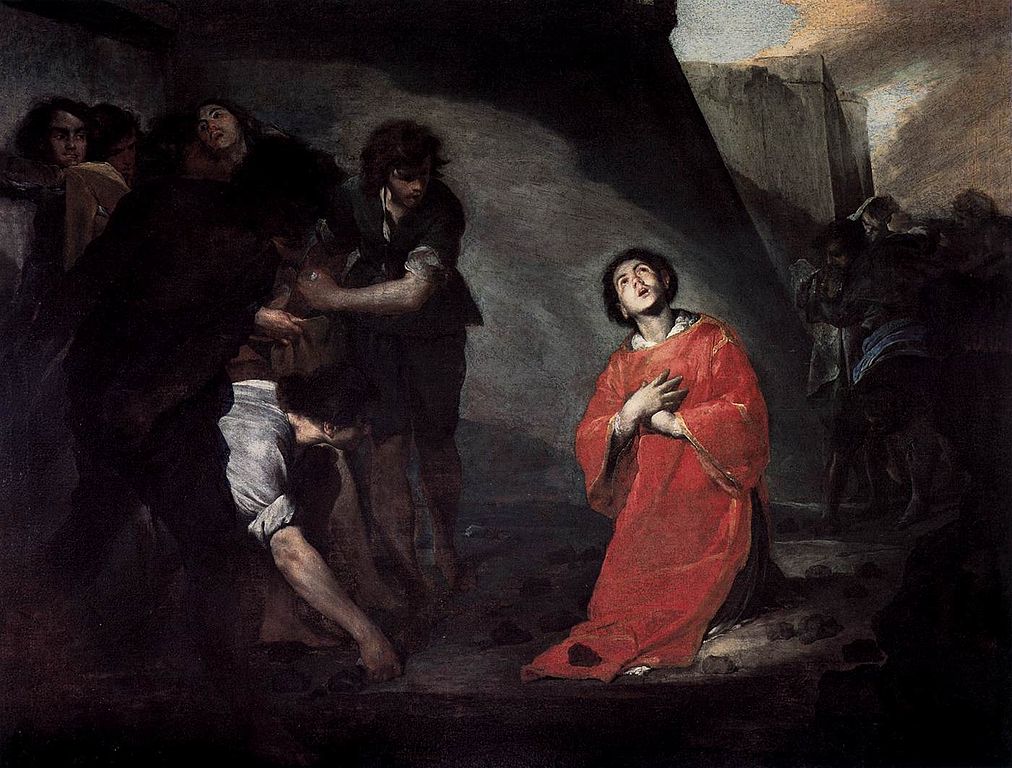
Stephen to Lazarus


But was I the first martyr, who
Gave up no more than life, while you,
Already free among the dead,
Your rags stripped off, your fetters shed,
Surrendered what all other men
Irrevocably keep, and when
Your battered ship at anchor lay
Seemingly safe in the dark bay
No ripple stirs, obediently
Put out a second time to sea
Well knowing that your death (in vain
Died once) must all be died again?


--C. S. Lewis (1898-1963) English author, poet, and Christian apologist

Thursday, March 23, 2023

I Lazarus


What could I make of the grass
But a gate to the skies
Looking up
Clouds floating by
Like the shapes of the dead ones
As radiant as angels
And when I opened the earth
Their tombs were all empty
My mother and father
The first to speak
Come here son
O how we missed you
All I could do was weep


— Stephen Rybicki (1941-2022), poet and librarian, from Commonweal magazine.

Wednesday, March 22, 2023

Lazarus Unbound


John 11:1-45


To the sound of distant weeping I exited:
“Eleazar, Eleazar,” my sisters cried
but the keen came as if from the bottom of a well,
recessing like a long, slow tide; fevered rasp
of buzzing insects in the sick room;
and my scroll was torn in half with what I thought
was finality.

All was still. I rose and spun
and I cooled like a stone skipped into a river
pain and broken body shrugged off, a spent husk:

At this point of the page I resume:
I had shed this tomb of a body and rolled back the stone.
In golden sunlight, walking under a canopy
of lupine-blue sky, hands at waist facing forward, fingers open
as bobbing seas of wildflowers
- anemones and poppies, rockrose, Aaron’s rod-
weave their stems around my wrists,
and I absorb the honeyed petrichor of a desert in bloom,
murmuration of sparrows from a wadi nearby

swallows swooping from the tops of locust trees.
The difference between a field and a wasteland is in the flowers.
All was rest. All was God. All was peace.

A kaleidoscope of colors and I am jerked back
by the voice of love, insistent.
From the depths he called me to rising with a voice tear-choked.
Then the longed-for renewal of breath back into a body
now stretched like a new wineskin across my soul.
I am a somnambulist, stumbling pale in my shroud
toward an aperture so bright all was white beyond,
heart pounding like a child’s eager fist at a door.


--Leslie Barnes Scoopmire, March 22, 2023


This was first published at Episcopal Journal and Cafe's Speaking to the Soul on March 23, 2023.

Scripture Reference: John 11:1-45, Lent 5A
Image: Jose Luis Castrillo, The Resurrection of Lazarus

Onto a Vast Plain


You are not surprised at the force of the storm–
you have seen it growing.
The trees flee. Their flight
sets the boulevards streaming. And you know:
he whom they flee is the one
you move toward. All your senses
sing him, as you stand at the window.

The weeks stood still in summer.
The trees’ blood rose. Now you feel
it wants to sink back
into the source of everything. You thought
you could trust that power
when you plucked the fruit:
now it becomes a riddle again
and you again a stranger.

Summer was like your house: you know
where each thing stood.
Now you must go out into your heart
as onto a vast plain. Now
the immense loneliness begins.
The days go numb, the wind
sucks the world from your senses like withered leaves.

Through the empty branches the sky remains.
It is what you have.
Be earth now, and evensong.
Be the ground lying under that sky.
Be modest now, like a thing
ripened until it is real,
so that he who began it all
can feel you when he reaches for you.

– Rainer Maria Rilke (1875-1926), Austrian poet and novelist, from The Book of Hours, translated by Joanna Macy and Anita Barrows

Scripture Reference: John 11:1-45, Lent 5A

Image: "Jesus Raises Lazarus from the Dead," by Ann Lukesh

Lazarus Risen


Lumbering out into the hectic light
like some dishevelled beast, I found myself
notorious, and would have turned back
but that cool and candid gaze unstitched
my shroud till it fell in shreds about me
and I walked among my weeping, bewildered kin.

Now their houses fall silent when I enter,
whey-faced and hesitant. For miles around
kids run howling home at the sound of my name
and when I pass even the trees look askance.
Sustained by a miracle, like flowers in a vase
my astonishing life continues in parenthesis.

Daily, strangers beat on my door.
How should I expect them to understand
my need for darkened rooms and blankets?
I still remember
Barabbas, drunk, circling the cross as blood
issued like a parable no one understood.

When they buried him I hid and waited
and saw his ragged body bleach the stones
and vanish. My arms hung like questions in the air.
They say my wits disdained that brusque choir
and smile at the familiar idiocy
that drives me now to watch in the evenings

the unearthly procession of light
from the grey loaves of the cemetery.
I think of silences broken only
by flesh loosening, the dry applause of bones,
while with growing confidence the spiky stars
transmit their small, post-dated fires.

–Peter Sirr, from Selected Poems(2005)

Scripture reference: John 11:1-45, Lent 5A