Showing posts with label resilience. Show all posts

Monday, January 23, 2023

Beatitudes


1.
My child wants to know if the mountains really cowered.
“How do you know when a sea or a river is afraid?
How do you know when the sky is thinking yes or no?

And why did Adam say yes—Did he know that
all the other creatures refused? Was he arrogant
or just ignorant? Was he God’s last choice?”

2.
“Did you really have a party the day the dictator died?
And you had a cake decorated with all the flags?
Did you think his death will fix everything?

Why did we spend all that time there?
Why couldn’t we just stay here?
Isn’t this our country too?

And all these people fleeing and drowning,
what are they hoping for? Whose fault is it?
How long must we wait for things to improve?”

3.
She speaks to me in our language
in front of her friends, to share a secret,
or—cool and beaming—to show off.

I wonder how long it will last, this pride,
this intimacy. Sometimes she puts her arm
next to mine and tells me I have the lighter skin.

“Why are you doing this,” I ask.
But she doesn’t point to the flag
or say, “It’s the way of the world.”

Instead she tells me not to worry, that she is “the most
kid kid in my class, the least mature one, Baba!”
Not all kinds of wisdom console, I tell her.

Then I begin to think of words she’ll soon hear
that can make her wish she wasn’t who she is.
Lead me to virtue, O love, through the smoke of despair.

4.
“Let’s walk through the woods,” she tells me.
“Let’s walk by the rocky shore at sunrise.”
“Let’s walk through the clover fields at noon.”

In the rainforest she is silent, mesmerized.
She’d never prayed—we never taught her—
but she seemed to then, eyes alert with joy.

She points to a chameleon the size of a beetle,
teaches me the names of flowers and trees,
insects we can eat if we’re ever lost here.

“I’m teaching you how to entrust the world
to me,” she says. “You don’t have to live
forever to shield me from it.”

--Khaled Mattawa (1964- ), Libyan-born American poet and translator or Arabic poetry.

Scriptural reference: Matthew 5:1-12, 4 Epiphany A

Friday, June 17, 2022

Good Bones


Life is short, though I keep this from my children.
Life is short, and I’ve shortened mine
in a thousand delicious, ill-advised ways,
a thousand deliciously ill-advised ways
I’ll keep from my children. The world is at least
fifty percent terrible, and that’s a conservative
estimate, though I keep this from my children.
For every bird there is a stone thrown at a bird.
For every loved child, a child broken, bagged,
sunk in a lake. Life is short and the world
is at least half terrible, and for every kind
stranger, there is one who would break you,
though I keep this from my children. I am trying
to sell them the world. Any decent realtor,
walking you through a real shithole, chirps on
about good bones: This place could be beautiful,
right? You could make this place beautiful.

- Maggie Smith (1977- ), American poet and mother, first published in Waxwing journal, 2016.

Tuesday, August 31, 2021

Vespers (End of August Heat)


End of August. Heat
like a tent over
John's garden. And some things
have the nerve to be getting started,
clusters of tomatoes, stands
of late lilies-- optimism
of the great stalks-- imperial
gold and silver: but why
start anything
so close to the end?
Tomatoes that will never ripen, lilies
winter will kill, that won't
come back in spring. Or
are you thinking
I spend too much time
looking ahead, like
an old woman wearing
sweaters in summer;
are you saying I can
flourish, having
no hope
of enduring? Blaze of the red cheek, glory
pf the open throat, white.
spotted with crimson.

-- Louise Gluck, (1943- ), American poet, and teacher, US Poet Laureate 2003,  awarded the Nobel Prize for Literature for 2020. Poem from The Wild Iris, 1992.

Sunday, May 31, 2020

The Lilies


When I learned I might have cancer,
I bought fifteen white lilies. Easter was gone:
the trumpets were wilted, plants crooked with roots
bound in pots. I dug them into the garden,
knowing they would not bloom for another year.
All summer, the stalks stood like ramshackle posts
while I waited for results. By autumn, the stalks
had flopped down. More biopsies, laser incisions,
the cancer in my tongue a sprawling mass. Outside,
the earth remained bare, rhizomes shrunken
below the frost line. Spring shoots appeared
in bright green skins, and lilies bloomed
in July, their waxed trumpets pure white,
dusting gold pollen to the ground.
                                                                                                    This year,
tripled in number, they are popping up again. I wait,
a ceremony, for the lilies to open, for the serpentine length
of the garden to bloom in the shape of my tongue’s scar,
a white path with one end leading into brilliant air,
the other down the throat’s canyon, black
and unforgiving. I try to imagine
what could grow in such darkness. I am waiting
for the lilies to open.

--Dr. Karenne Wood (1960-2019), member of the Monacan Indian Nation, poet and anthropologist, from Markings on Earth, 2001


Sunday, December 1, 2019

(don't be bewildered)


don't be bewildered
by the cold weather!
dragonfly

--Kobayashi Issa (1763-1828), Japanese poet and haiku master, written 1811, translated by David G. Lanoue

.うろたへな寒くなるとて赤蜻蛉
urotae na samuku naru tote aka tombo

Thursday, June 20, 2019

An American Sunrise


We were running out of breath, as we ran out to meet ourselves. We
were surfacing the edge of our ancestors’ fights, and ready to strike.
It was difficult to lose days in the Indian bar if you were straight.
Easy if you played pool and drank to remember to forget. We
made plans to be professional — and did. And some of us could sing
so we drummed a fire-lit pathway up to those starry stars. Sin
was invented by the Christians, as was the Devil, we sang. We
were the heathens, but needed to be saved from them — thin
chance. We knew we were all related in this story, a little gin
will clarify the dark and make us all feel like dancing. We
had something to do with the origins of blues and jazz
I argued with a Pueblo as I filled the jukebox with dimes in June,
forty years later and we still want justice. We are still America. We
know the rumors of our demise. We spit them out. They die
soon.

--Joy Harjo (1951- ), Muscogee (Creek) American, US poet laureate 2019-, from Poetry magazine, February 2017


Photo by Shawn Miller for the Library of Congress, June 19, 2019

Tuesday, May 28, 2019

Insomnia and the Seven Steps to Grace


At dawn the panther of the heavens peers over the edge of the world.
She hears the stars gossip with the sun, sees the moon washing her lean
darkness with water electrified by prayers. All over the world there are those
who can't sleep, those who never awaken.

My granddaughter sleeps on the breast of her mother with milk on
her mouth. A fly contemplates the sweetness of lactose.

Her father is wrapped in the blanket of nightmares. For safety he
approaches the red hills near Thoreau. They recognize him and sing for
him.

Her mother has business in the house of chaos. She is a prophet dis-
guised as a young mother who is looking for a job. She appears at the
door of my dreams and we put the house back together.

Panther watches as human and animal souls are lifted to the heavens by
rain clouds to partake of songs of beautiful thunder.

Others are led by deer and antelope in the wistful hours to the vil-
lages of their ancestors. There they eat cornmeal cooked with berries
that stain their lips with purple while the tree of life flickers in the sun.

It's October, though the season before dawn is always winter. On the
city streets of this desert town lit by chemical yellow travelers
search for home.

Some have been drinking and intimate with strangers. Others are
escapees from the night shift, sip lukewarm coffee, shift gears to the
other side of darkness.

One woman stops at a red light, turns over a worn tape to the last
chorus of a whispery blues. She has decided to live another day.

The stars take notice, as do the half-asleep flowers, prickly pear and
chinaberry tree who drink exhaust into their roots, into the earth.

She guns the light to home where her children are asleep and may
never know she ever left. That their fate took a turn in the land of
nightmares toward the sun may be untouchable knowledge.

It is a sweet sound.

The panther relative yawns and puts her head between her paws.
She dreams of the house of panthers and the seven steps to grace.

--Joy Harjo (1951- ), Muscogee (Creek) American, US Poet Laureate 2019- , from Th Woman Who Fell From the Sky: Poems, 1996.


Photo of panther (mountain lion) from the National Park Service.

Sunday, May 12, 2019

Untitled


They took away what should have been my eyes,
(But I remembered Milton's Paradise).
They took away what should have been my ears,
(Beethoven came and wiped away my tears).
They took away what should have been my tongue,
(But I had talked with God when I was young).
He would not let them take away my soul —
Possessing that, I still possess the whole.

-- Helen Keller (1880–1968), American author, teacher, and public speaker

Wednesday, March 6, 2019

The Place Where We Are Right


From the place where we are right
Flowers will never grow
In the spring.

The place where we are right
Is hard and trampled
Like a yard.

But doubts and loves
Dig up the world
Like a mole, a plow.
And a whisper will be heard in the place
Where the ruined
House once stood.

--Yehuda Amichai, (1924-2000), acclaimed Israeli poet


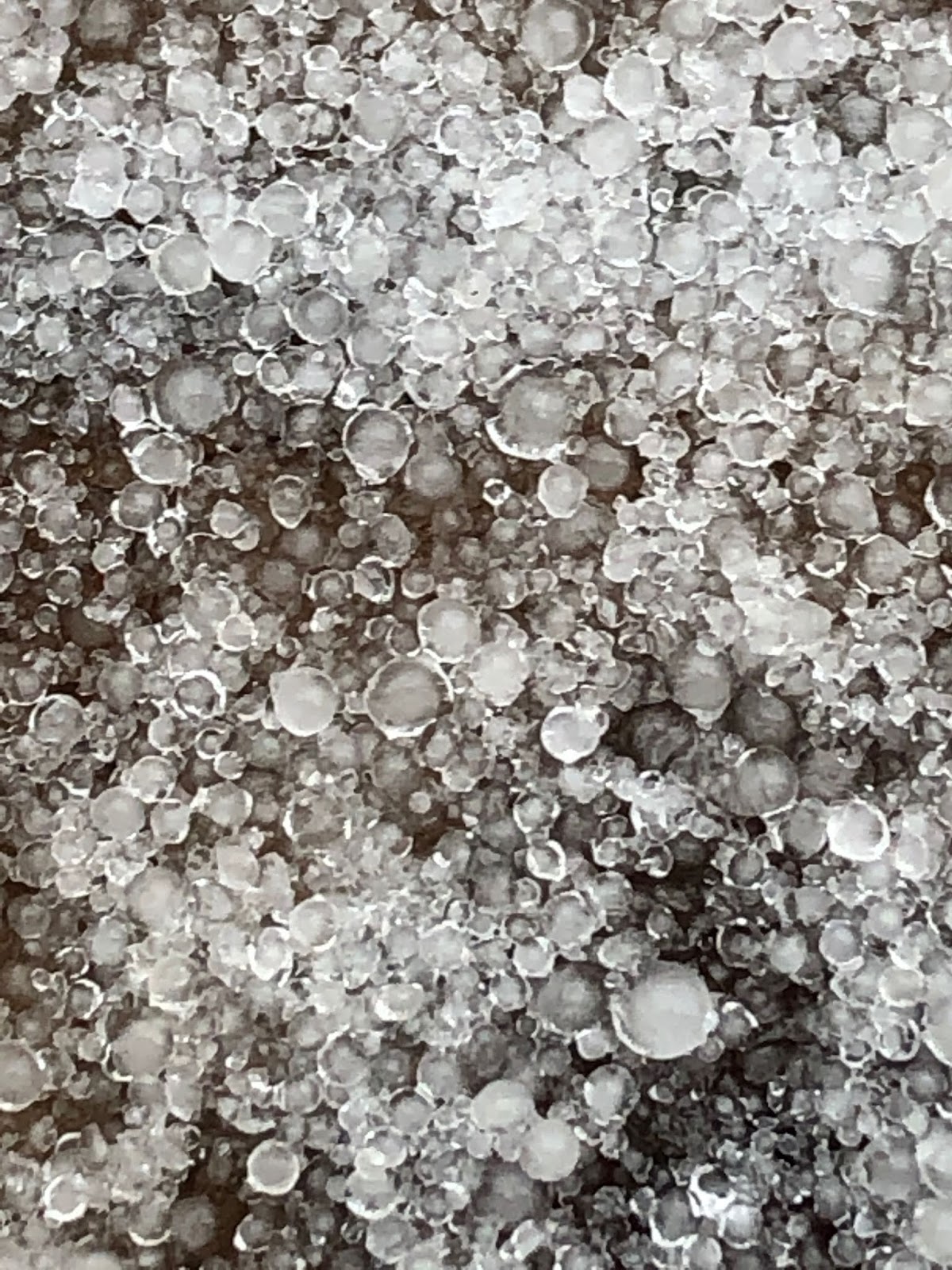
Image: Freezing Rain, Frozen Ground, February 10, 2019

Sunday, September 9, 2018

Optimism


More and more I have come to admire resilience.
Not the simple resistance of a pillow, whose foam
returns over and over to the same shape, but the sinuous
tenacity of a tree: finding the light newly blocked on one side,
it turns in another. A blind intelligence, true.
But out of such persistence arose turtles, rivers,
mitochondria, figs–all this resinous, unretractable earth.

-- Jane Hirshfield (1953- ), American poet and editor


Image: The Survivor Tree at the Oklahoma City Memorial and Museum

Sunday, December 24, 2017

Open Unto Me


Lord, Lord, Open Unto Me
Open unto me, light for my darkness

Open unto me, courage for my fear

Open unto me, hope for my despair

Open unto me, peace for my turmoil

Open unto me, joy for my sorrow

Open unto me, strength for my weakness

Open unto me, wisdom for my confusion

Open unto me, forgiveness for my sins

Open unto me, tenderness for my toughness

Open unto me, love for my hates

Open unto me, Thy Self for myself


Lord, Lord, open unto me!

--Howard Thurman (1899-1981), African American theologian, educator, Baptist minister and civil rights leader

Wednesday, November 29, 2017

The Journey

One day you finally knew
what you had to do, and began,
though the voices around you
kept shouting
their bad advice –
though the whole house
began to tremble
and you felt the old tug
at your ankles.
‘Mend my life!’
each voice cried.
But you didn’t stop.
You knew what you had to do,
though the wind pried
with its stiff fingers
at the very foundations –
though their melancholy
was terrible.
It was already late
enough, and a wild night,
and the road full of fallen
branches and stones.
But little by little,
as you left their voices behind,
the stars began to burn
through the sheets of clouds,
and there was a new voice,
which you slowly recognized as your own,
that kept you company
as you strode deeper and deeper
into the world,
determined to do
the only thing you could do –
determined to save
the only life you could save.

--Mary Oliver (1935- ), from Dream Work (1994)